Aircraft · Edition II · September MMXXVI · 5 min
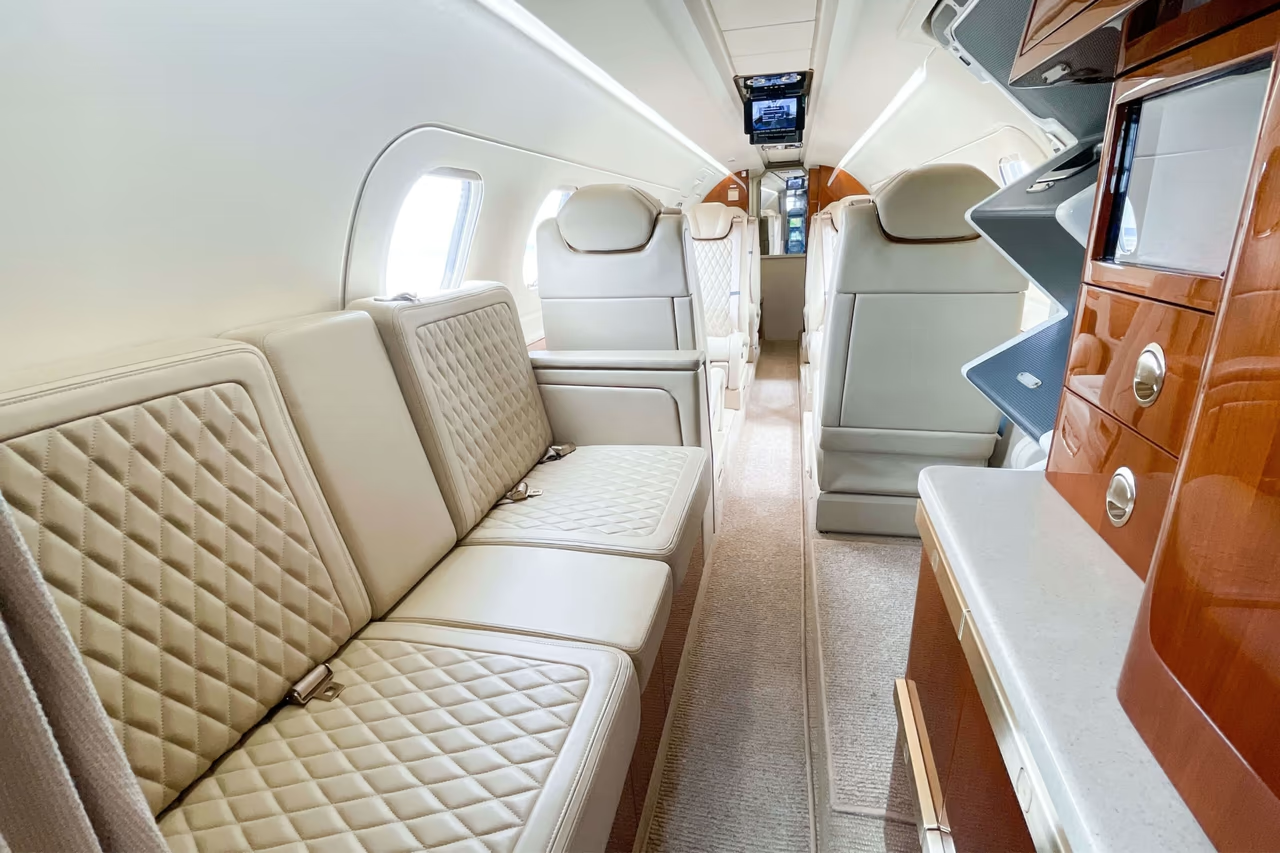
xxi. Cabin · the class is a start, not an answer
Light, midsize, and super-midsize aren't uniform regulatory classes. They're commercial conventions that can vary between manufacturers, brokers, and databases. For a gatekeeper, the useful question isn't which category the passenger wants — it's which aircraft meets the mission with a verifiable operating margin.
What actually needs evaluating
| Variable | Light jet | Midsize | Super-midsize |
|---|---|---|---|
| Typical use | Short legs, small groups | Longer range and more cabin capacity | Longer legs, more payload and cabin |
| Main trade-off | Less space and payload | Cost and availability against capacity | Higher operating cost and airport restrictions |
| Risk of a bad pick | Not enough baggage room, range, or comfort | Paying for capacity that goes unused | Oversizing the mission |
These labels don't replace the AFM data sheet, the specific configuration, or the operator's own analysis. NBAA recommends confirming date, passengers, destinations, preferences, special needs, and aircraft type before recommending options. It also notes that range is usually stated in nautical miles, and that there's a trade-off between range capability and payload.
Light jet
A light jet can be efficient for a small group on short or medium routes, especially when the priority is reaching an airport close to the final destination. The evaluation has to include the real load — baggage, golf bags, equipment, pets, or medical needs can change the mission more than the seat count does.
Midsize
Midsize usually widens the combination of range, cabin space, and payload. But more range doesn't mean the specific flight is nonstop — wind, temperature, alternates, reserves, weight, and airport restrictions can all change the result.
Super-midsize
Super-midsize can make sense when the mission needs more cabin, payload, or range, but it shouldn't get picked on label alone. The broker has to confirm performance for the departure and arrival airports, takeoff weight, configuration, and any need for extra fuel.
A professional recommendation should show at least one alternative and explain the selection criteria. A bigger aircraft doesn't make up for a bad read on runway, weather, or availability. The right aircraft is the one that completes the whole mission, not the one with the widest spec sheet.
Related reading
Aircraft
How far can a light jet actually fly.
A light jet's published range depends on payload, wind, reserves, altitude, and configuration. Here's how to read it before anyone confirms a nonstop.
Aircraft
Heavy jet or ultra-long-range — when the bigger cabin matters.
Heavy and ultra-long-range aren't a hierarchy. Duration, passengers, baggage, rest, nonstop capability, and airport requirements decide which one actually fits.
Aircraft
How payload quietly changes your range.
Passengers, baggage, and fuel compete for the same weight limit. Here's how payload actually decides range and nonstop viability.
§For correspondence on this note — or any mission it raises — write directly to the principal.