Aircraft · Edition II · September MMXXVI · 5 min
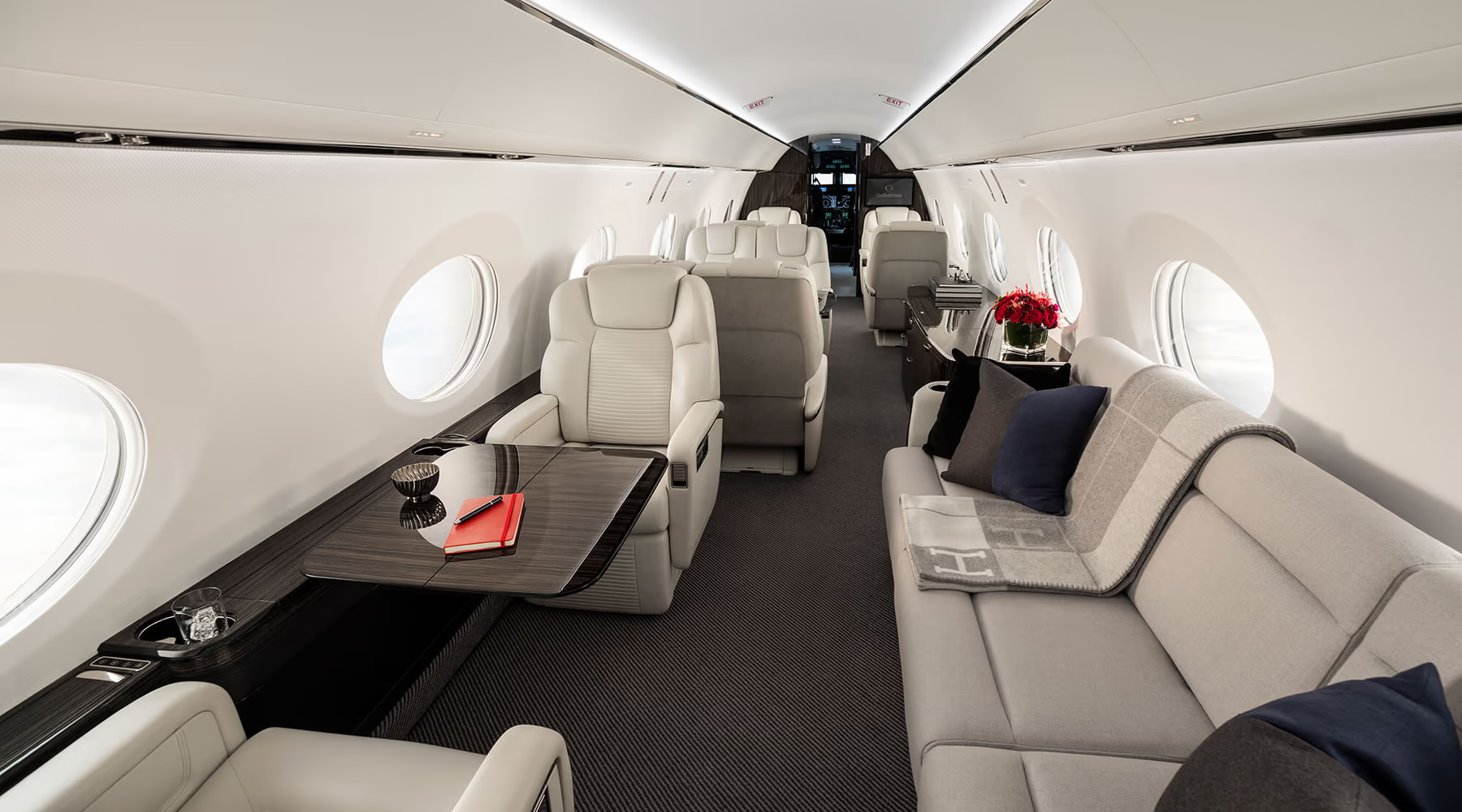
xxiii. Cabin · size justified by mission, not by inertia
The choice between a heavy jet and an ultra-long-range aircraft should be justified by the mission, not by a product hierarchy. A heavy can be enough for a group with baggage on a long route; an ultra-long-range can add range, rest space, or more flexibility to cut a stop. The criterion depends on load, duration, airports, and reserves.
Deciding variables
- Distance and forecast wind.
- Number of passengers and baggage.
- Need for beds or separate rest zones.
- Fuel capacity and maximum weight.
- Required alternates and reserves.
- Destination airport and its performance limits.
- Likelihood of changing the route or adding a leg.
Manufacturers usually publish more than one range figure because the result changes with payload and conditions. The FAA explains that mission takeoff weight combines operating weight, passengers or cargo, mission fuel, and reserves — and that total can be limited by MTOW or by airport performance.
When the heavy is enough
A heavy can be the right answer when the flight sits inside its planning envelope, the payload is compatible with the fuel load, and the cabin meets the actual needs. If the mission tolerates a reasonable stop, or the group doesn't need separate rest zones, an ultra-long-range aircraft can add cost and complexity without solving an actual operational problem.
When the ultra-long-range makes sense
It can be justified when nonstop is an operational priority, the mission carries significant payload, rest zones are required, or the routing and alternates leave little margin. Even then, the operator has to confirm the calculation for that specific date, not just repeat a brochure figure.
The question for the broker is: what specific constraint does the bigger aircraft remove? If the answer doesn't mention payload, range, rest, alternates, or airport, the recommendation is probably based on category, not mission.
Related reading
Aircraft
Choosing an aircraft for a transatlantic charter.
A transatlantic charter turns on more than range: payload, reserves, alternates, oceanic authority, crew experience, and airports all decide the real answer.
Aircraft
Light, midsize, or super-midsize — matched to mission.
The jet category is a starting point, not a mission spec. Cabin, payload, range, airports, reserves, and operational flexibility decide the real answer.
Aircraft
What NBAA IFR range actually means.
NBAA IFR range builds in reserves and planning assumptions, but it doesn't guarantee any single mission. Here's what separates the published figure from the real flight.
§For correspondence on this note — or any mission it raises — write directly to the principal.