Operations · Edition III · September MMXXVI · 5 min
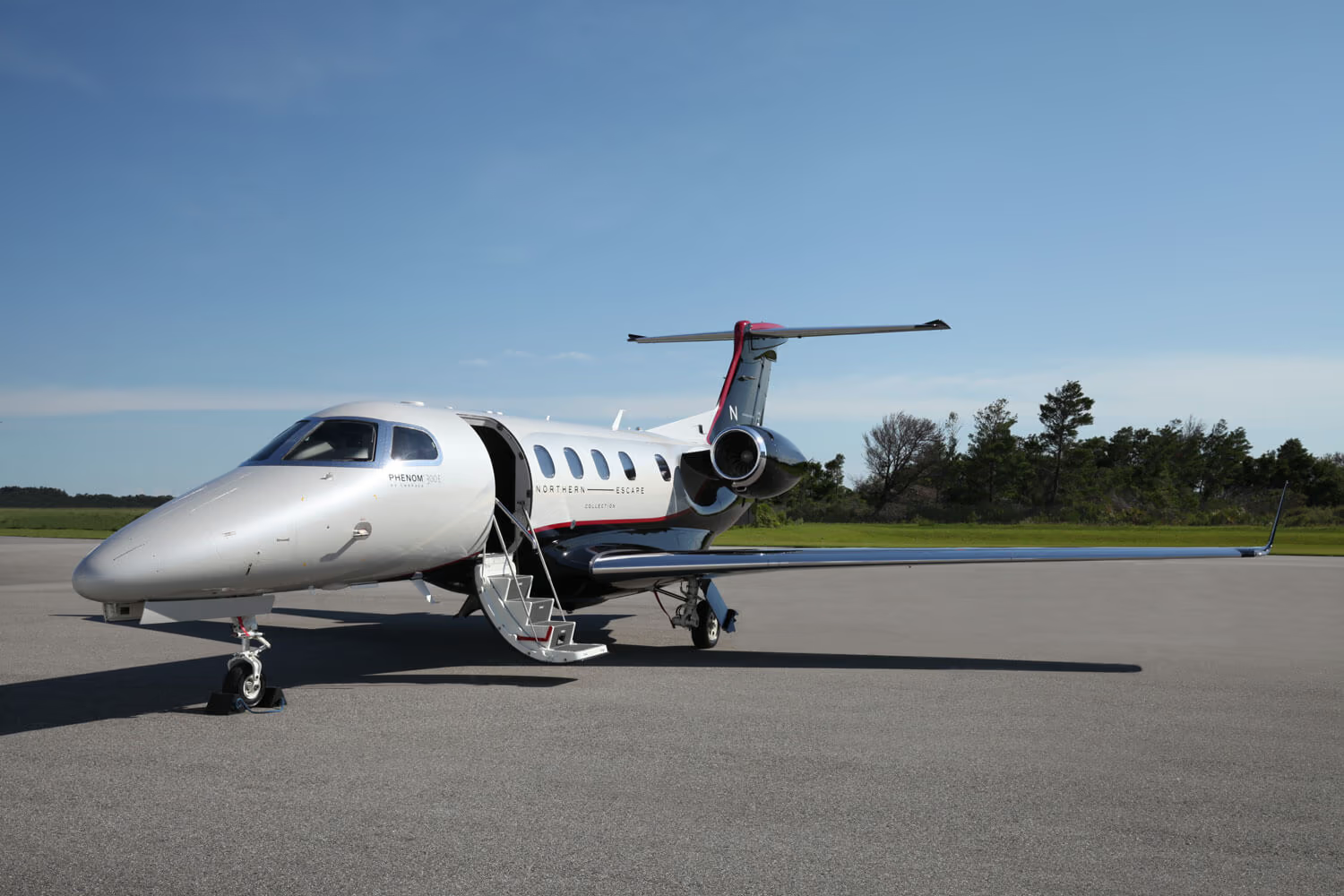
xlvi. Ramp · flexibility decides, not the headline
Empty legs can be useful when the flight department can accept uncertainty in aircraft location, departure time, route, and aircraft type. On-demand charter is generally the more appropriate structure when the schedule, aircraft specification, and recovery plan are non-negotiable. The decision depends on calendar flexibility, not on the advertised discount.
Empty-leg conditions
An empty leg is normally tied to another aircraft movement. Its availability can change if the underlying revenue flight changes, cancels, or moves. The buyer should confirm whether the empty leg is firm, what conditions apply, whether the aircraft can be repositioned if the underlying trip changes, and what refund or replacement terms exist.
On-demand conditions
On-demand charter is preferable when the department needs:
- A fixed departure window.
- A defined aircraft class or cabin.
- A specific payload or baggage solution.
- Confirmed nonstop performance.
- A strong substitute-aircraft obligation.
- A predictable cancellation and disruption framework.
The flight department should compare total operational exposure, not just the initial quote. Include ground repositioning, schedule risk, passenger disruption, replacement cost, and the possibility of losing the opportunity altogether.
Regardless of the structure, verify the actual operator and aircraft authorization. The FAA's Part 135 list is designed for that verification, and FAA guidance advises clients to confirm authorization before paying for a charter.
The right policy may allow empty legs for flexible leisure or low-consequence positioning while requiring on-demand lift for board meetings, medical travel, critical negotiations, or tightly sequenced international itineraries. The distinction belongs in the aviation policy, not in an improvised decision made from a discount headline.
Related reading
Operations
The empty-leg discount, and why it's often not real.
An empty leg is a repositioning flight put up for sale, not a guaranteed discount. Here's why the '50% off' number rarely means what it sounds like.
Operations
Empty legs, and when they serve.
What is an empty leg? It's a repositioning flight an aircraft must fly with no passengers — to collect a charter or return to base. Priced as a one-way deal, it can be excellent value, but only when its fixed timing and route happen to match the brief.
Governance
Supplemental lift, for the mission your aircraft can't fly.
Supplemental lift isn't an admission that the flight department failed. It's a capacity-control mechanism — and it works best when the triggers are defined before the request is urgent.
§For correspondence on this note — or any mission it raises — write directly to the principal.