Standards · Edition II · September MMXXVI · 6 min
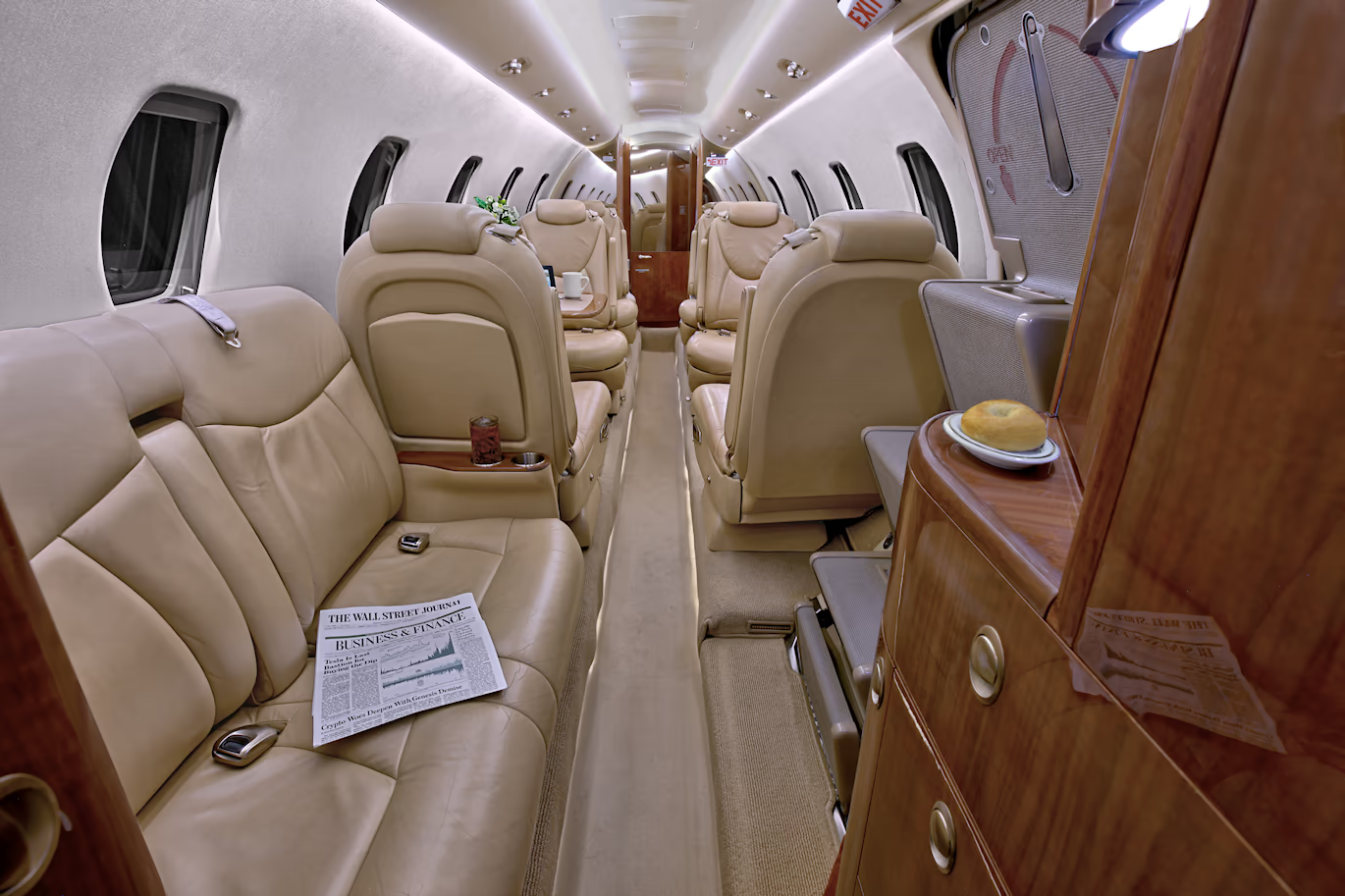
xvi. Cabin · capacity, sourced by the mission
Off-fleet brokerage exists because a specific mission's demand doesn't always line up with an owned fleet or a fractional share. An operation might need an aircraft from a different category, coverage from another continent, or capacity for a calendar spike, without acquiring permanent capability.
NBAA acknowledges that charter operators can draw on aircraft from other fleets to supplement their own capacity, but recommends telling the client who the direct air carrier will actually be. It also recommends confirming that the activity stays within the DOT and FAA authority of the operator doing the selling or the brokering.
The economics
Owning a fleet locks up capital, maintenance, crew, and positioning around specific assets. A fractional share adds scheduled access and a shared-ownership structure, but requires buying or leasing a share, a management agreement, and a dry-lease exchange; NBAA also describes multi-year contractual commitments as typical, though terms vary by program.
Off-fleet turns part of that fixed cost into a per-mission decision. The buyer pays for the transportation contracted, not for keeping an aircraft available on a permanent basis. The trade-off is that availability, tail number, crew, and operator can vary, so diligence has to be repeated on every flight.
When it can be the better option
- The mission needs a category or configuration the owned fleet doesn't have.
- The origin sits outside the operator's usual network.
- The department needs temporary capacity during maintenance or a demand spike.
- Frequency doesn't justify ownership, a fractional share, or a multi-year commitment.
- Several operators need to be compared for a mission sensitive to airport, payload, or schedule.
The benefit isn't "more aircraft" in the abstract. It's more room to adjust — as long as the broker doesn't confuse market breadth with operational control. NBAA recommends getting written confirmation of availability and closing a contract that names the model, tail number, routing, insurance, crew, maintenance, and operating terms.
Where the risk shows up
The structure gets fragile when an intermediary promises an aircraft before getting a binding commitment from the operator or owner. It also breaks down when a broker reuses one brand's rating for a different aircraft or carrier, or when a substitution gets communicated as a routine service update.
The test of quality is documentary:
- Direct air carrier and authority.
- Tail number and specific aircraft.
- Crew and the method used to verify them.
- Applicable insurance.
- Substitution terms.
- Day-of-flight contact.
Off-fleet isn't a lesser category. It's a sourcing model. It works when the provider-selection criteria stay independent of aircraft ownership, and when the client knows which entity operates each leg.
Related reading
Standards
Broker, operator, fractional — who actually owns the risk.
Broker, direct air carrier, and fractional program don't distribute risk the same way. These are the questions that separate selling, operating, and answering for a flight.
Standards
'Broker-owned fleet' — a claim, not a conclusion.
The phrase can describe marketing, management, or genuine ownership. The question that actually matters is who holds the certificate and the operational control.
Engagement
Broker or operator — who holds the brief.
Should you charter through a broker or go direct to an operator? An operator flies one fleet to one standard; a broker sources across many, screened to the mission. For anything beyond a single repeat route, the broker's reach is the point — provided the broker screens by tail.
§For correspondence on this note — or any mission it raises — write directly to the principal.