Operations · Edition I · May MMXXVI · 4 min
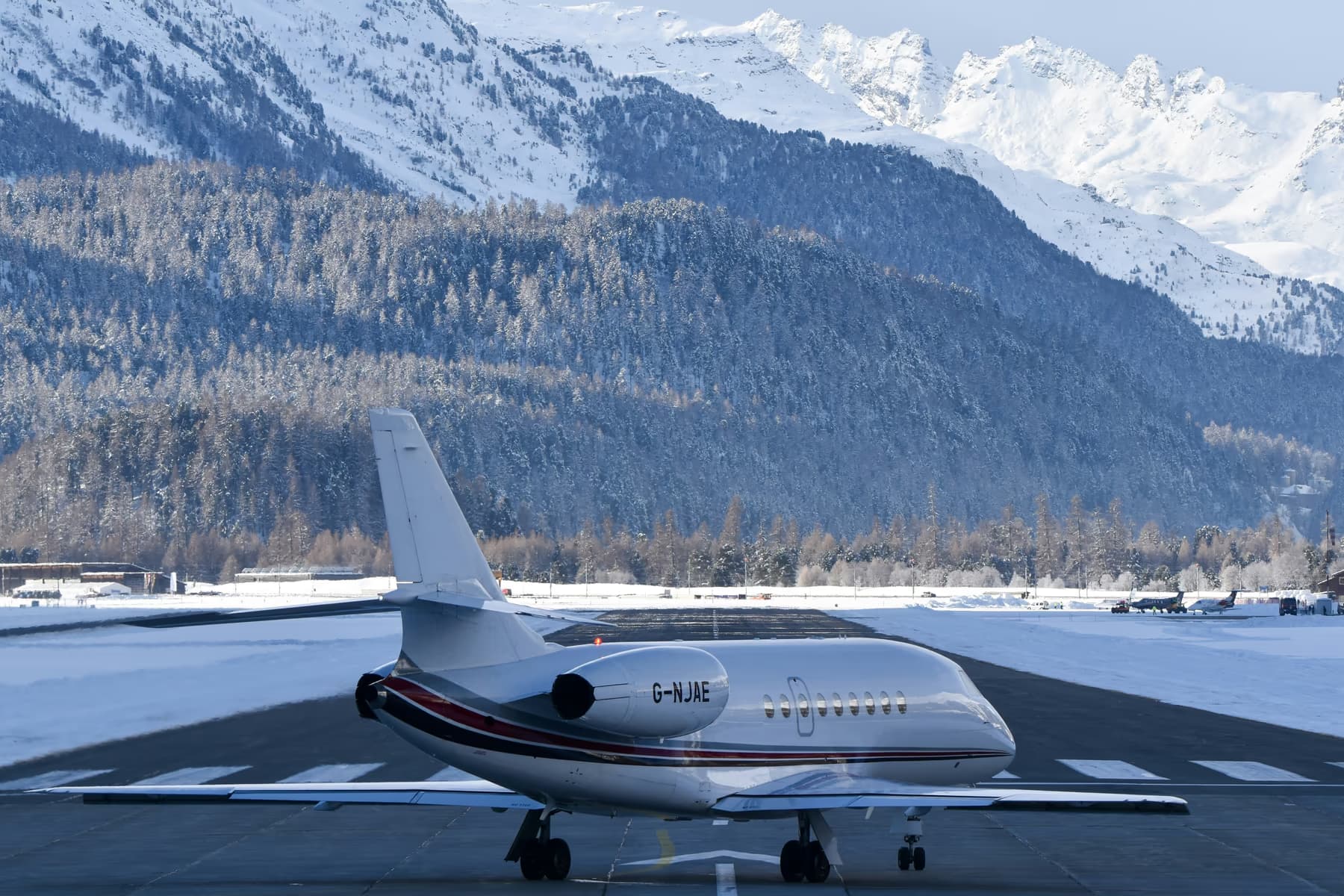
ii. Engadin · the cost of −12°C
Engadin, Sion, Courchevel, Aspen, Friedman Memorial. The high-elevation winter-season strips are where supplemental lift earns its margin.
Slot pressure is the first hidden cost. On peak weekends — late December, mid-February school holidays — slots at LSZS are released in 15-minute bands and traded informally. A quote that assumes "depart Sunday afternoon" without confirming the slot is a quote that becomes a renegotiation.
De-icing turnaround is the second. A Type IV application has a holdover time measured in minutes, not hours; if the slot is missed, the application must be repeated. Operators with their own ground equipment quote one number; operators dependent on the FBO de-icing queue quote another. Both are "correct," but only one is honest about Sunday afternoon at Samedan.
Crew duty windows are the third. Cold-weather rotations consume duty time on the ground — pre-flight, de-ice, push-back, taxi to runway with multiple holds. A leg that planned for 7 hours of crew duty consumes 9. If the next leg is the return, this becomes a crew-rest issue, which becomes an overnight cost, which becomes either absorbed by the operator or passed to the client.
The smallest details — the way a Falcon 7X idles in −12°C, the brake heat-soak window after a Sion landing, the spool-up margin on a cold-start G650 — separate a competent broker from a careful one. None of it appears in a marketing brochure. All of it appears in the post-flight summary.
Related reading
Aircraft
Winter charter to alpine airports — runway and altitude, explained.
At alpine airports, altitude, density, slope, runway contamination, wind, and weight can rule out an aircraft even when its range would otherwise be enough.
Aircraft
Choosing an aircraft for a transatlantic charter.
A transatlantic charter turns on more than range: payload, reserves, alternates, oceanic authority, crew experience, and airports all decide the real answer.
Operations
Repositioning costs, explained.
A charter quote is more than the hours between two cities. Positioning, crew, availability, permits, and calendar all move the number — here's what's actually in it.
§For correspondence on this note — or any mission it raises — write directly to the principal.